
For years, Uganda's opposition has positioned itself as the loudest critic of government expenditure, corruption, and what it describes as wasteful use of taxpayers' money.
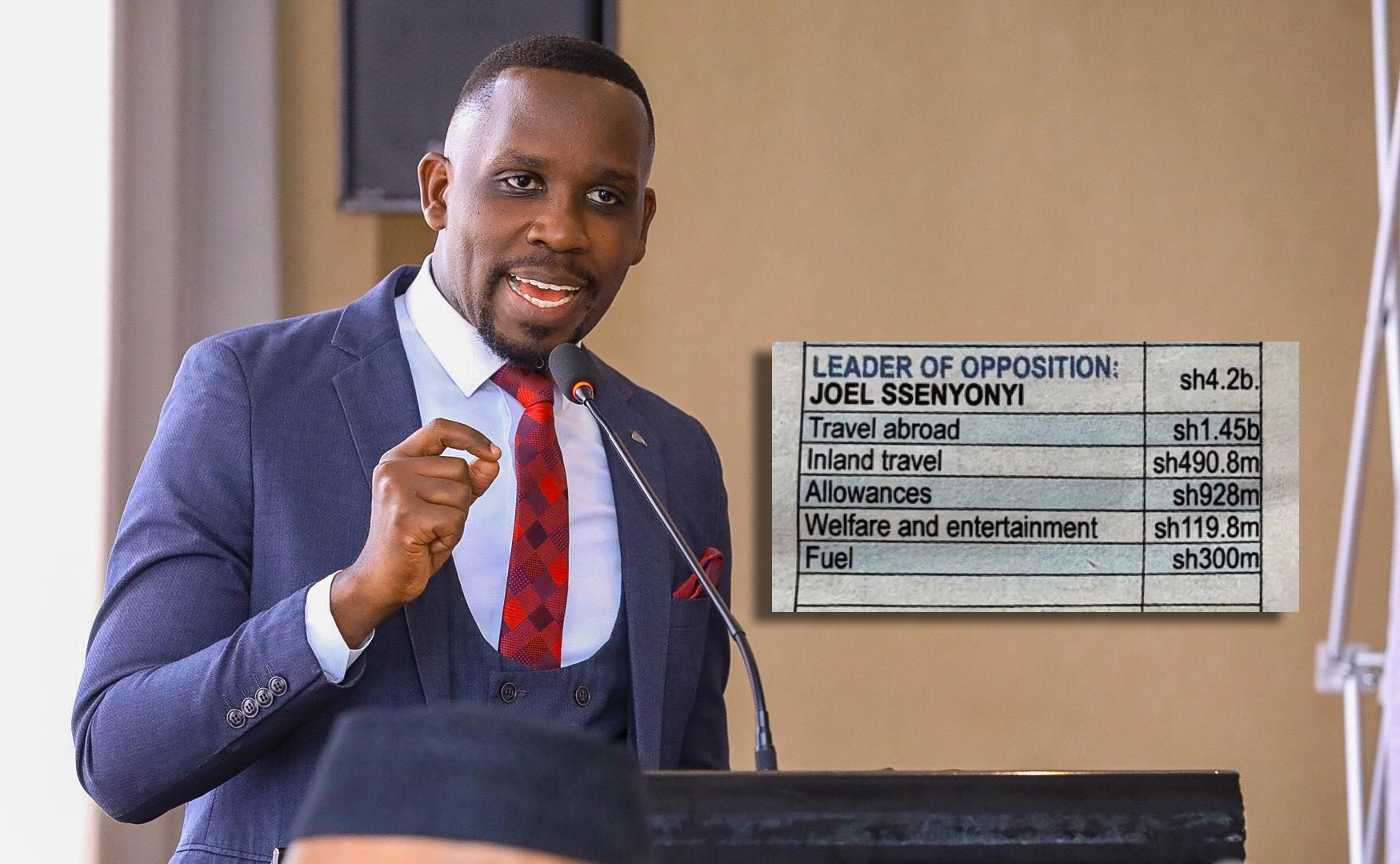
But a budget breakdown linked to the office of Leader of the Opposition Joel Ssenyonyi is now fueling a different conversation.
The figures show that the Office of the Leader of the Opposition is allocated approximately Shs4.2 billion, with major expenditure items including Shs1.45 billion for foreign travel, Shs490.8 million for inland travel, Shs928 million in allowances, Shs119.8 million for welfare and entertainment, and Shs300 million for fuel.
The numbers have sparked debate among political observers and government supporters who argue that opposition leaders cannot consistently criticize public spending while benefiting from substantial government-funded budgets themselves.
Critics say the contradiction is difficult to ignore.
"When opposition politicians attack government expenditure every day but operate offices funded by the same taxpayers, questions naturally arise about consistency," one political analyst noted.
Supporters of the opposition, however, argue that these allocations are institutional budgets rather than personal earnings. They maintain that the Leader of the Opposition's office plays a constitutional role in scrutinizing government programs and requires resources to carry out oversight, research, consultations, and travel.
Still, the figures are likely to provide ammunition to ruling party supporters who have long accused opposition politicians of publicly condemning government systems while privately benefiting from them.
The debate also highlights a broader political reality in Uganda: both government and opposition offices are financed through public funds approved by Parliament.
What remains controversial is whether opposition leaders should be more transparent about how such allocations are utilized, especially when they demand accountability from government ministries and agencies.
As the discussion grows, attention is shifting from what politicians say at press conferences to how every public institution, government and opposition alike spends taxpayer money.
For many Ugandans struggling with the rising cost of living, the emerging question is simple: if accountability is expected from government officials, should opposition leaders be held to exactly the same standard?