
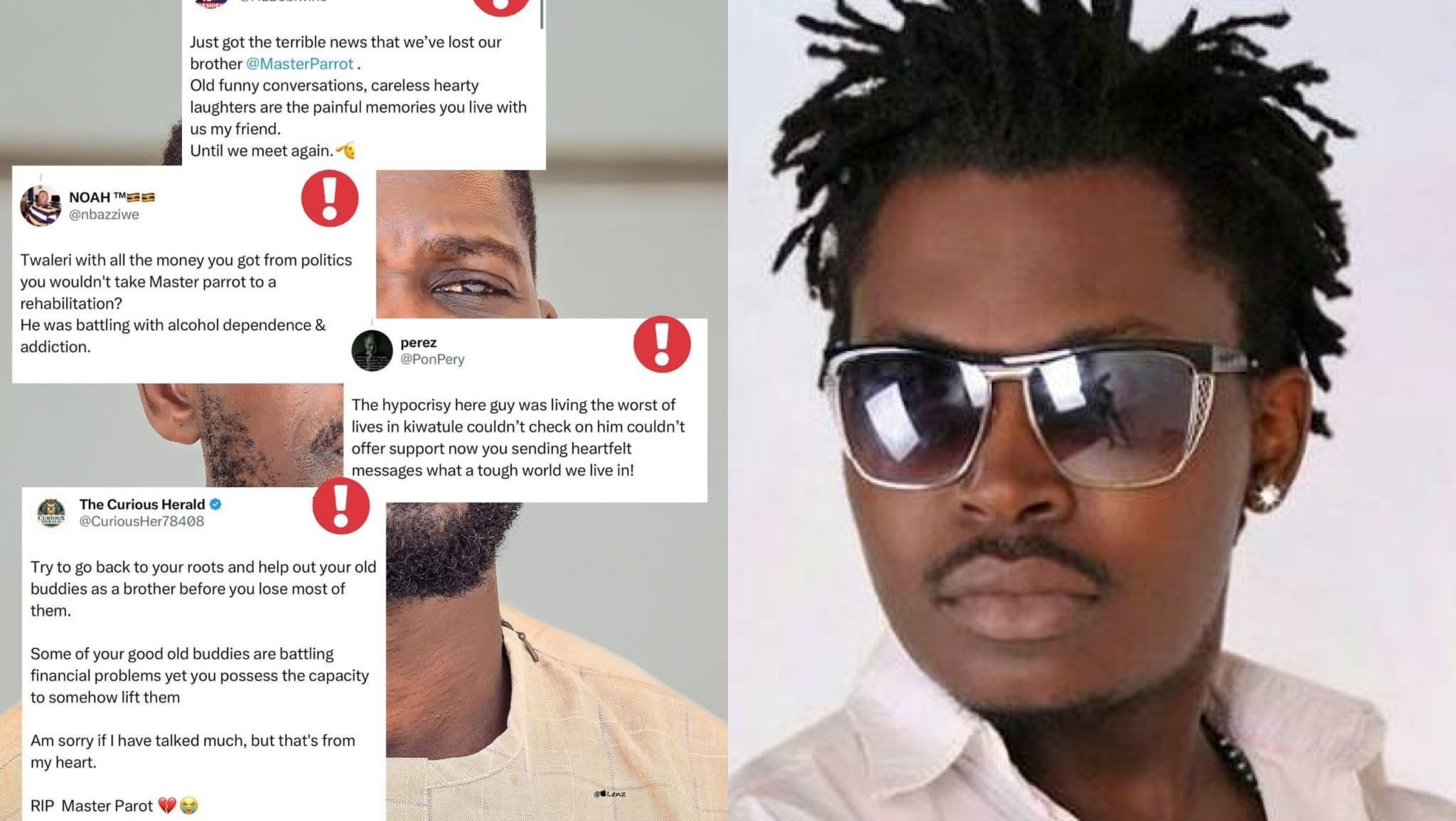
What began as a heartfelt farewell has quickly turned into a storm of criticism.
Following the death of Master Parrot, Bobi Wine shared an emotional tribute mourning the loss of a man he described as a friend and longtime comrade. But instead of focusing solely on the message, many social media users turned their attention to the years leading up to Master Parrot’s death.
The backlash was swift.
Several commenters questioned whether the former Firebase Crew leader had done enough to support one of his oldest friends during difficult moments in his life.
“The hypocrisy here,” one user wrote. “The guy was living the worst of lives in Kiwatule. You couldn’t check on him, couldn’t offer support, but now you’re sending heartfelt messages.”
Others pointed to Master Parrot’s well-known personal struggles, arguing that friends with influence and financial means should have intervened earlier.
“Twaleri, with all the money you got from politics, you wouldn’t take Master Parrot to rehabilitation?” another commenter asked, referring to reports that the entertainer had battled alcohol dependence.
The criticism did not stop there.
Some supporters of the late entertainer used the moment to call on Bobi Wine to reconnect with members of the old Firebase family who they believe have been left behind as his political career grew.
“Try to go back to your roots and help out your old buddies before you lose most of them,” one emotional post read. “Some of your good old friends are battling financial problems yet you possess the capacity to somehow lift them.”
The comments have reignited a long-running conversation about the fate of some of the pioneers who helped build the Firebase movement during its early days. While Bobi Wine went on to become one of Uganda’s most influential political figures, several former associates have struggled to maintain the same level of success.
Supporters of Bobi Wine, however, have rushed to his defense. They argue that no one can fully know the nature of private friendships and that it is unfair to assume he abandoned Master Parrot simply because their relationship was no longer publicly visible.
They also insist that responsibility for a person’s health challenges cannot be placed on a single friend, regardless of status or wealth.
Still, the emotional reactions reveal the deep sense of loss surrounding Master Parrot’s death. For many Ugandans, the debate is about more than a condolence message. It is about loyalty, friendship, and whether those who rise to the top should continue carrying along the people who helped them get there.
As tributes continue to pour in, one thing is clear: Master Parrot’s passing has reopened painful questions about friendship, fame, and the forgotten soldiers of Uganda’s entertainment industry.