
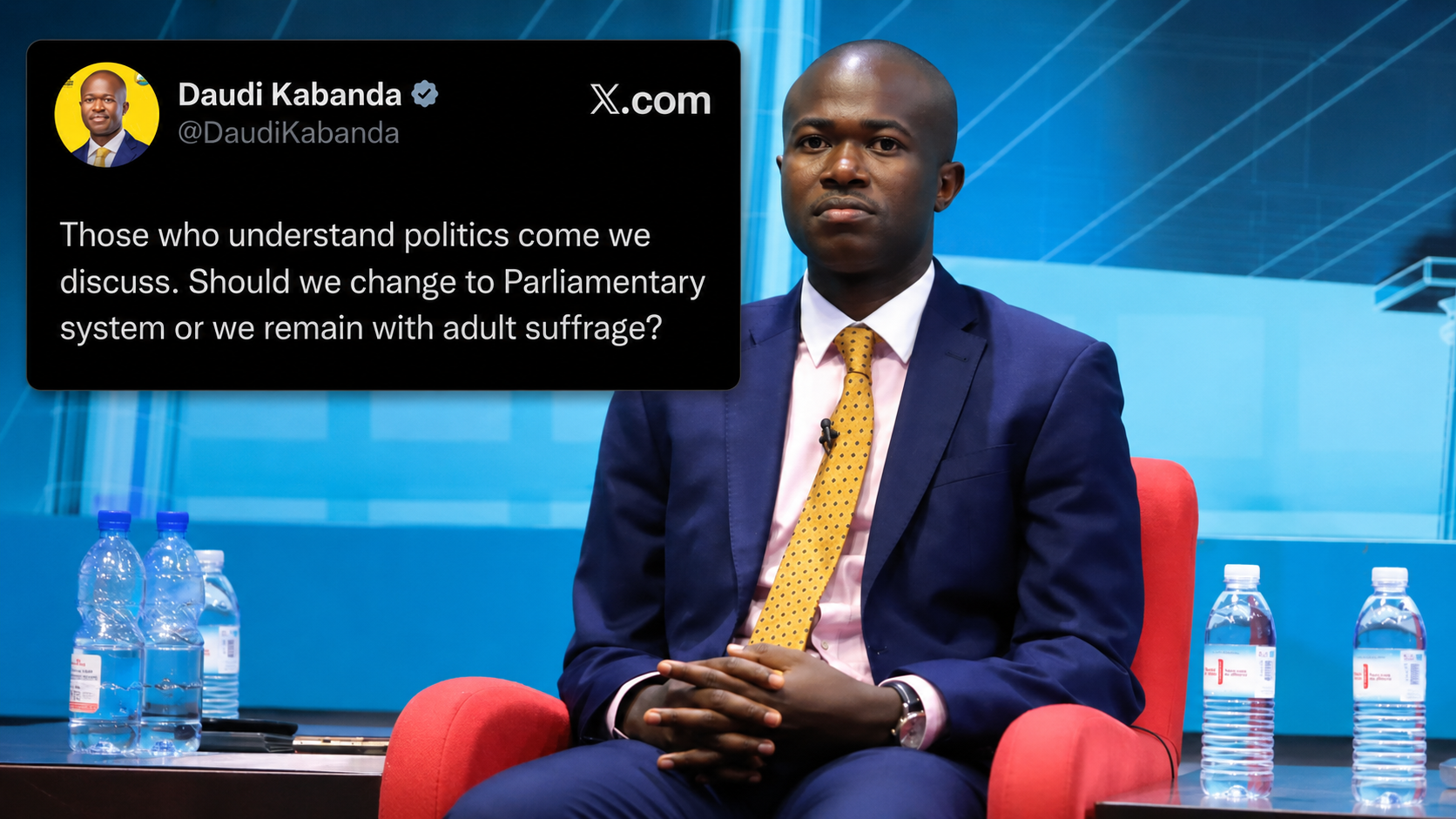
A seemingly simple political question from MP Kabanda has sent Uganda’s online political class into speculation mode.
“Those who understand politics come we discuss. Should we change to Parliamentary system or we remain with adult suffrage?” the legislator posted, immediately attracting reactions from political observers, activists, and ordinary social media users.
The timing of the message is what has many people talking.
For years, Uganda has operated under a presidential system where the President is elected directly by voters through universal adult suffrage. However, discussions about shifting to a parliamentary system where the head of government emerges from Parliament rather than a direct national vote have surfaced repeatedly in political debates.
Under a parliamentary arrangement, citizens would still vote, but primarily for Members of Parliament. The party or coalition commanding the majority in Parliament would then determine who leads the government.
Kabanda’s post has therefore been interpreted by some commentators as more than a casual intellectual exercise.
Political watchers note that discussions around Article 103 of the Constitution and possible governance reforms have appeared periodically in recent years, with various politicians, analysts, and pressure groups floating ideas about changing how Uganda elects its national leadership.
Others, however, caution against reading too much into the post.
At this stage, there is no official government announcement indicating that Uganda is abandoning universal adult suffrage. The question raised by Kabanda appears to be a discussion prompt rather than a formal policy proposal. Previous debates on the issue have generated strong public reactions, with supporters arguing that parliamentary systems can strengthen political parties, while critics insist that direct presidential voting gives citizens a stronger voice in choosing their leader.
Still, in Uganda’s politics, even a single sentence from a well-connected politician can trigger a much larger conversation.
Whether Kabanda was testing public opinion, provoking debate among political thinkers, or hinting at future discussions remains unclear.
But one thing is certain: his question has reopened a debate that goes far beyond social media and straight into the future shape of Uganda’s leadership model.