

Uganda has taken another step toward strengthening its biotechnology sector after President Yoweri Museveni welcomed the HUVET Bio-Science Park initiative, a project expected to boost local vaccine production and advance veterinary biotechnology.
The initiative, spearheaded by Eng. Hashem Azimi, is designed to expand Uganda's capacity to manufacture vaccines locally while promoting scientific research, innovation, and industrial development. The project aligns with the country's broader strategy of reducing dependence on imported medical and veterinary products and building long-term vaccine sovereignty.
During the engagement, President Museveni praised the initiative as a timely investment in Uganda's scientific and manufacturing capabilities. He emphasized that local production of vaccines and other biotechnology products is essential for national development, improved animal health, and stronger economic resilience.
The President also reaffirmed the government's commitment to supporting investments that promote industrialization, scientific innovation, and value addition, noting that strengthening domestic manufacturing will help Uganda become more self-reliant while positioning the country as a regional biotechnology hub.
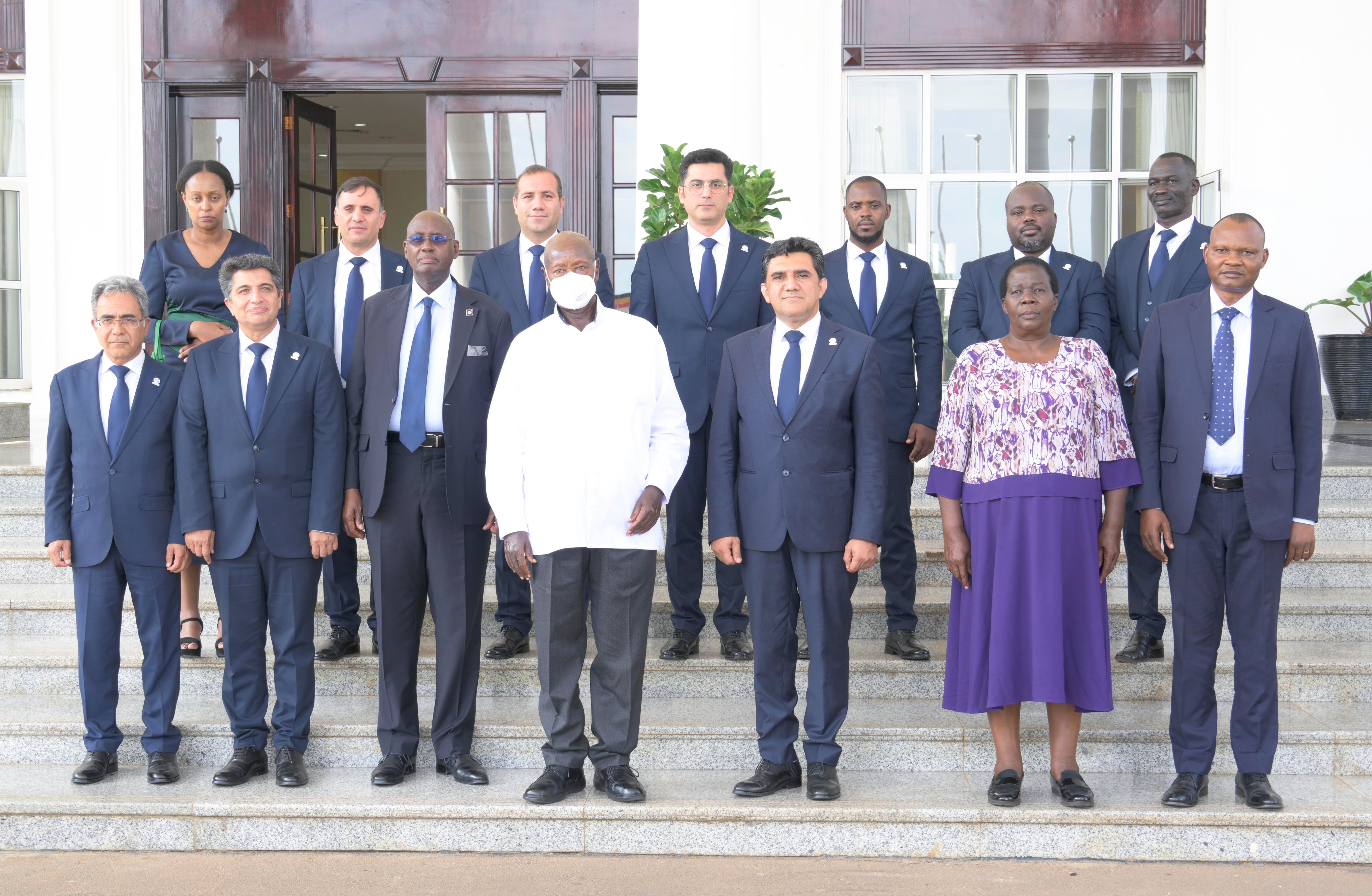
The launch was marked by a formal meeting attended by senior officials and project stakeholders. Guests later posed for commemorative group photographs before Eng. Azimi presented President Museveni with a colorful painting, adding a symbolic touch to the occasion.
The HUVET Bio-Science Park has attracted positive reactions from many observers, who say the project has the potential to create skilled employment opportunities, strengthen veterinary research, and improve Uganda's preparedness against disease outbreaks affecting both livestock and public health.
The development comes as Uganda continues investing in local vaccine manufacturing and biotechnology infrastructure, following recent government-backed efforts to expand research, establish bioscience parks, and increase domestic vaccine production capacity. Officials believe such investments will reduce import dependence while supporting innovation and economic growth.