
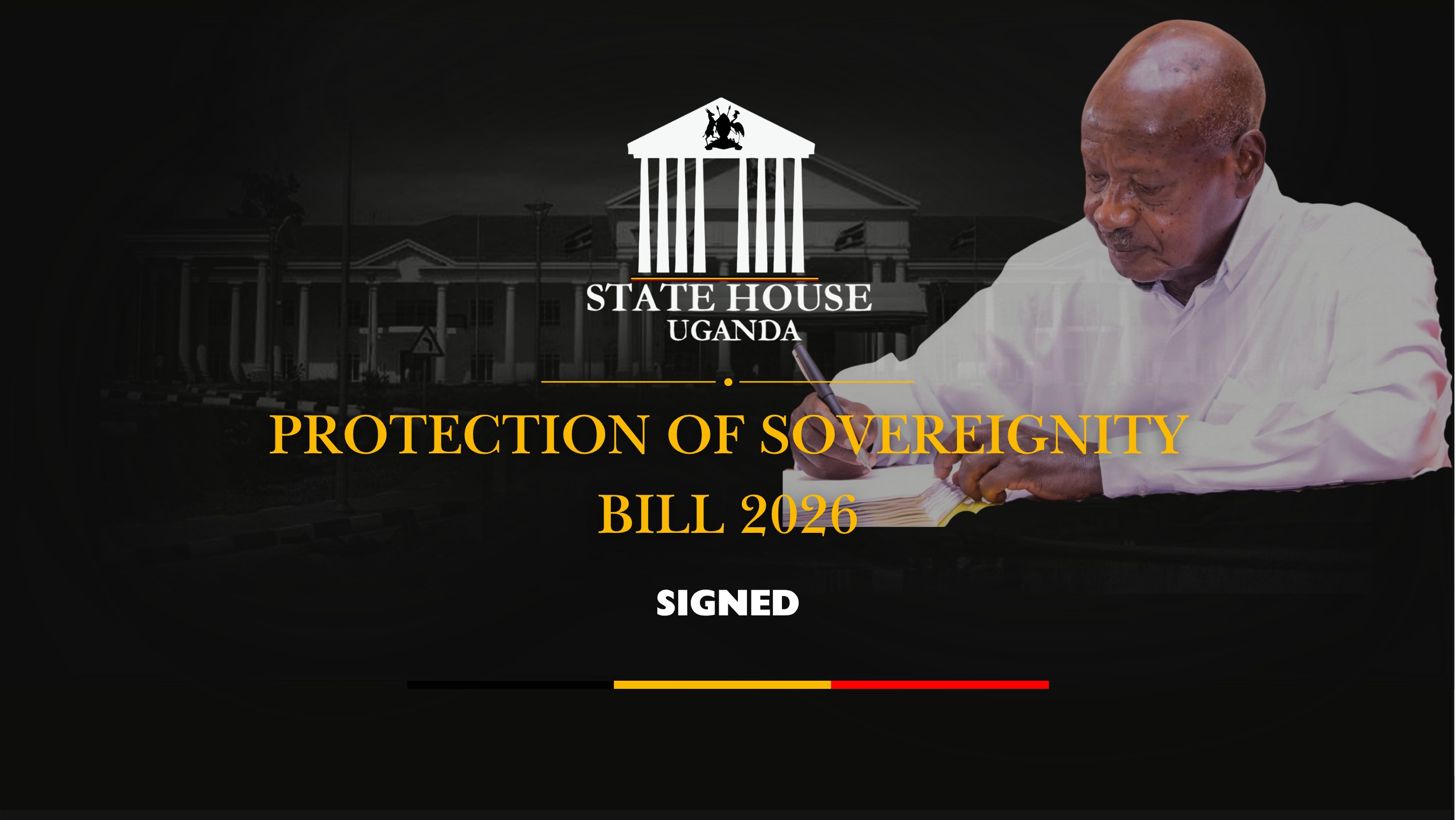
President Yoweri Kaguta Museveni has officially signed the long-debated Protection of Sovereignty Bill into law, setting off one of the biggest political conversations Uganda has seen this year and opening a completely new chapter in the country’s fight over foreign influence, activism and political control.
The development comes just days after Parliament passed the explosive bill following heated debates inside and outside the House, where opposition MPs, civil society organisations and human rights groups warned that the legislation could dramatically reshape Uganda’s civic and political space.
Government, however, insists the new law is about defending Uganda from external manipulation and protecting national independence.
The now-enacted law introduces strict regulations on individuals, organisations and groups accused of acting on behalf of foreign interests in ways authorities believe could interfere with Uganda’s sovereignty, security or political stability.
At the centre of the storm is the law’s powerful “foreign agent” framework.
Under the new arrangement, organisations or individuals linked to foreign political funding or influence activities may be required to register with authorities, disclose funding sources and comply with tighter state oversight. Violations could attract heavy fines, suspension of operations and criminal penalties.
Government officials have defended the move aggressively.
Supporters of the law argue Uganda has for years faced growing pressure from foreign governments, lobby groups and international organisations attempting to shape local politics, governance debates and policy decisions through funding networks, advocacy campaigns and influence operations.
During discussions surrounding the bill, state officials repeatedly argued that sovereign nations must protect themselves against external interference disguised as activism or donor support.
The law also arrives at a politically sensitive moment.
Uganda is already entering an intense political period as preparations for the next electoral cycle slowly begin to take shape. Political mobilisation, youth activism and NGO activity have all increased over recent years, especially online where social media campaigns have become increasingly influential in shaping public debate.
That is exactly where critics say the danger lies.
Opposition figures and rights organisations claim the law’s language is broad enough to target legitimate civic work, independent advocacy and political dissent. Some activists fear organisations receiving foreign grants could now face enormous pressure from authorities, especially if their work touches governance, elections, corruption or human rights issues.
Several legal experts have also warned that vague terms such as “foreign influence” and “interference” could create confusion during enforcement.
The bill had already triggered serious panic inside parts of Uganda’s financial and development sectors even before it became law.
Banking officials and economists reportedly raised concerns that earlier versions of the legislation could scare investors, disrupt NGO financing channels and negatively affect remittances sent home by Ugandans abroad.
Those fears became so intense that Parliament eventually softened several controversial clauses before the final vote.
Some of the original proposals that critics described as too extreme were reportedly revised or removed entirely. Government later assured the public that ordinary business transactions, remittances and lawful investments would not be targeted.
Still, the signing of the law is expected to send shockwaves through civil society organisations, donor-funded institutions and political groups operating across the country.
International human rights organisations have already started comparing Uganda’s legislation to controversial “foreign agent” laws previously introduced in countries such as Russia and Georgia, comparisons government supporters strongly reject.
Inside Uganda, reactions have remained sharply divided.
NRM supporters are celebrating the law as a bold statement of independence and patriotism, arguing that no sovereign country should allow foreign-funded actors to influence internal political affairs without regulation.
Critics, however, believe the real battle is only beginning.
Lawyers and opposition actors are now expected to challenge parts of the law in court, potentially setting up a major constitutional showdown in the coming months.
What happens next will largely depend on how aggressively authorities decide to implement the new powers.
For now, one thing is clear: Uganda’s political landscape has changed dramatically and the effects of the new Sovereignty Law could shape the country’s politics, activism and public debate for years to come.