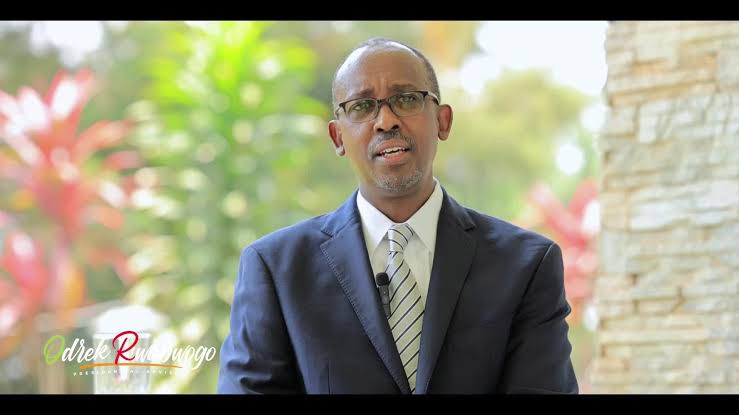
A powerful call by senior presidential advisor Odrek Rwabwogo has ignited fresh national debate over Uganda's political climate and its impact on the country's long-term economic ambitions.
Speaking about Uganda's development agenda, Rwabwogo argued that fear is one of the country's biggest obstacles to progress, saying it discourages citizens from speaking openly, weakens institutions and ultimately erodes national confidence.
He maintained that a country seeking transformational economic growth cannot afford an environment where people remain silent out of fear or where differing opinions are routinely suppressed.
His comments come as Uganda pursues its Vision 2040 agenda, which seeks to expand the country's economy to around $500 billion through investments in agro-industrialization, tourism, mineral development, science, technology and innovation.
However, Rwabwogo's remarks have landed amid a politically charged atmosphere.
In recent days, opposition figures including National Unity Platform deputy president Muhammad Muwanga Kivumbi have been at the center of renewed controversy following his reported arrest after previously securing court bail. At the same time, Uganda has faced growing scrutiny over restrictions affecting sections of the media after Chief of Defence Forces Gen. Muhoozi Kainerugaba publicly ordered the shutdown of major independent media outlets, prompting criticism from local and international rights organizations.
The timing of Rwabwogo's message has therefore attracted widespread attention online.
Some commentators welcomed his remarks, arguing that acknowledging the damaging effects of fear and self-censorship is an important step toward strengthening governance, encouraging innovation and building investor confidence.
Others, however, questioned whether the statement would translate into meaningful reforms, describing it as insufficient without stronger protections for freedom of expression, independent institutions and civic participation. Several voices also argued that fighting corruption and ensuring equal application of the law would be essential if Uganda is to achieve its ambitious economic targets.
The debate reflects a wider national conversation about whether political openness, institutional independence and economic transformation can advance together as Uganda positions itself for the coming decades.
While supporters see Rwabwogo's intervention as a candid appeal for greater openness, critics insist that the country's economic aspirations will ultimately depend not only on investment and infrastructure but also on public trust, accountability and confidence in democratic institutions.