
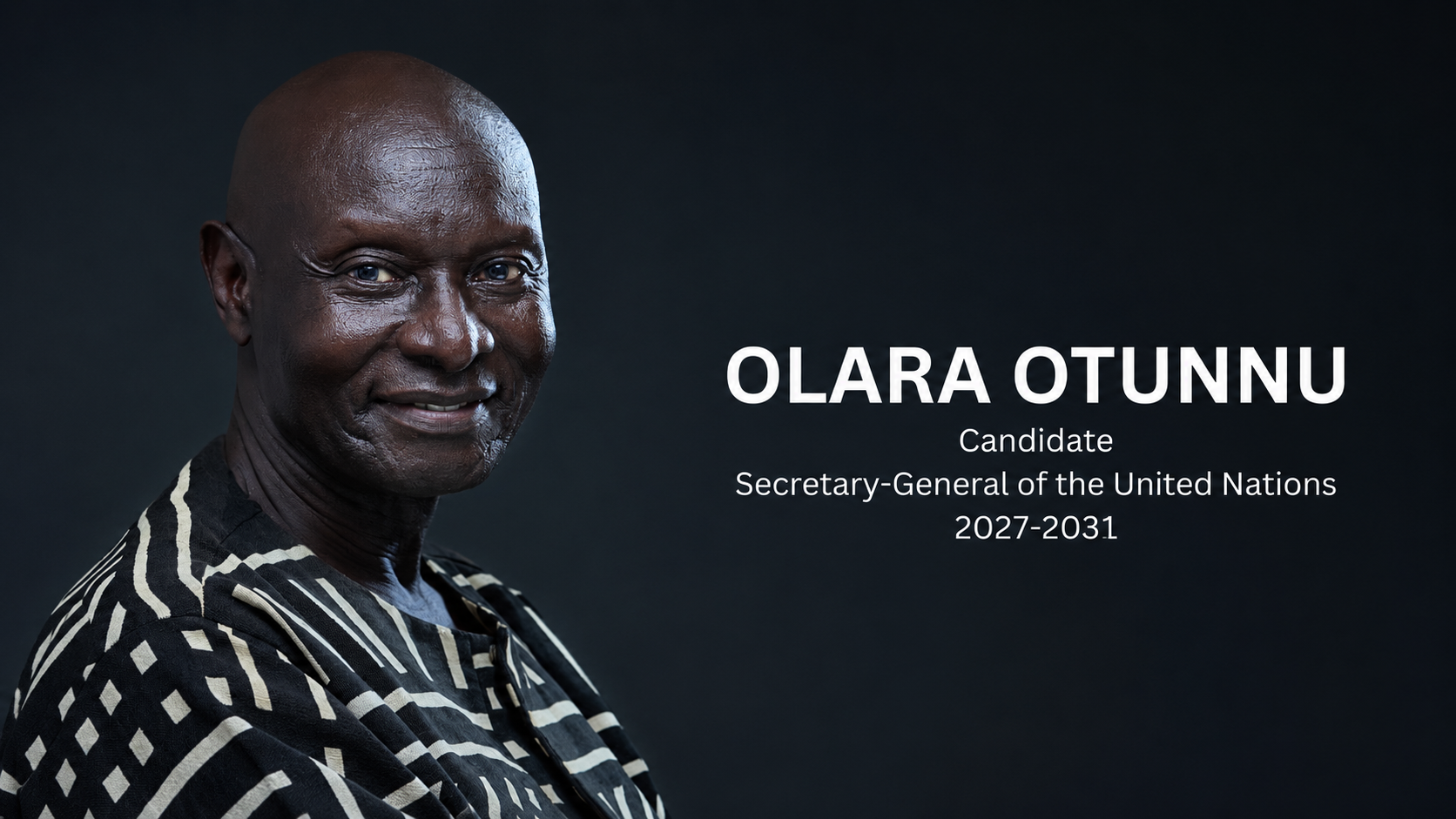
Uganda’s ambitious push to see veteran diplomat Olara Otunnu become the next United Nations Secretary-General has received a fresh boost after the Ugandan candidate significantly improved his standing in the latest Security Council straw poll.
Otunnu secured five “encourage” votes in the second informal poll held on August 21, up from just two in the first round on July 30. His “discourage” votes remained at five, while “no opinion” votes fell from eight to five.
The result moved Otunnu into fifth position among the eight candidates currently in the race, behind Guyana’s Carolyn Rodrigues Birkett, Costa Rica’s Rebeca Grynspan, Argentina’s Rafael Grossi and Senegal’s Macky Sall.
It is a notable turnaround for a candidate who finished at the bottom of the first straw poll.
Uganda formally nominated Otunnu in July, putting forward the 75-year-old former UN Under-Secretary-General as its candidate to replace António Guterres, whose second term ends on December 31, 2026.
Otunnu brings an unusually deep connection to the UN system. He served as Uganda’s Permanent Representative to the organisation from 1980 to 1985 and later became the first UN Special Representative for Children and Armed Conflict, serving from 1998 to 2005. His work helped place the protection of children affected by armed conflict firmly on the Security Council agenda.
There is another twist to his candidacy: Otunnu helped develop the informal straw-poll system used in the selection of UN secretaries-general after serving as president of the Security Council in 1981. The very process he helped shape is now being used to assess his own chances of reaching the top job.
President Yoweri Museveni has thrown the full weight of the Ugandan government behind the campaign.
At State House in Entebbe, Museveni presented Otunnu to representatives of Security Council member states and described him as an experienced Ugandan statesman whose international career makes him suitable to lead the world body. The President has also directed Uganda’s diplomatic machinery to mobilise support for the candidature.
The endorsement is particularly striking because Otunnu and Museveni have a complicated political history.
Otunnu was once a prominent critic of the Museveni government, served as president of the Uganda People’s Congress and previously contested for Uganda’s presidency. He has also spoken about years of political difficulties, including a period in which he said he was left without a Ugandan passport. More recently, however, Otunnu said he had chosen to move beyond those disputes and concentrate on what he described as a shared national mission.
That reconciliation has not silenced criticism.
Otunnu’s acceptance of government backing has opened a broader debate about the intersection between his long record on human rights and the political controversies surrounding the administration now campaigning for him. His own pitch for the UN job has emphasised human-rights protection, peacebuilding, institutional reform and a stronger moral role for the organisation.
The debate has also spilled into Uganda’s highly polarised political and social-media space, where discussions surrounding the candidacy have at times been framed through regional and partisan identities. But the more consequential contest is taking place far from Kampala.
Inside the Security Council, Otunnu still faces a difficult road.
The latest poll did not produce a decisive frontrunner, and a candidate ultimately needs to secure the backing required to survive the Security Council’s permanent-member veto structure before the General Assembly can appoint the next Secretary-General.
For now, however, Uganda has reason to celebrate.
After a weak opening showing, Otunnu has doubled his positive support, delivered his campaign pitch directly to UN member states and begun a new diplomatic push through key world capitals. On August 24, he started a capital-to-capital campaign in Washington, where he was scheduled to meet senior US officials as part of efforts to build international support.
The next rounds will determine whether that momentum can carry Uganda’s candidate from an intriguing comeback story into serious contention for the UN’s most powerful diplomatic office.