
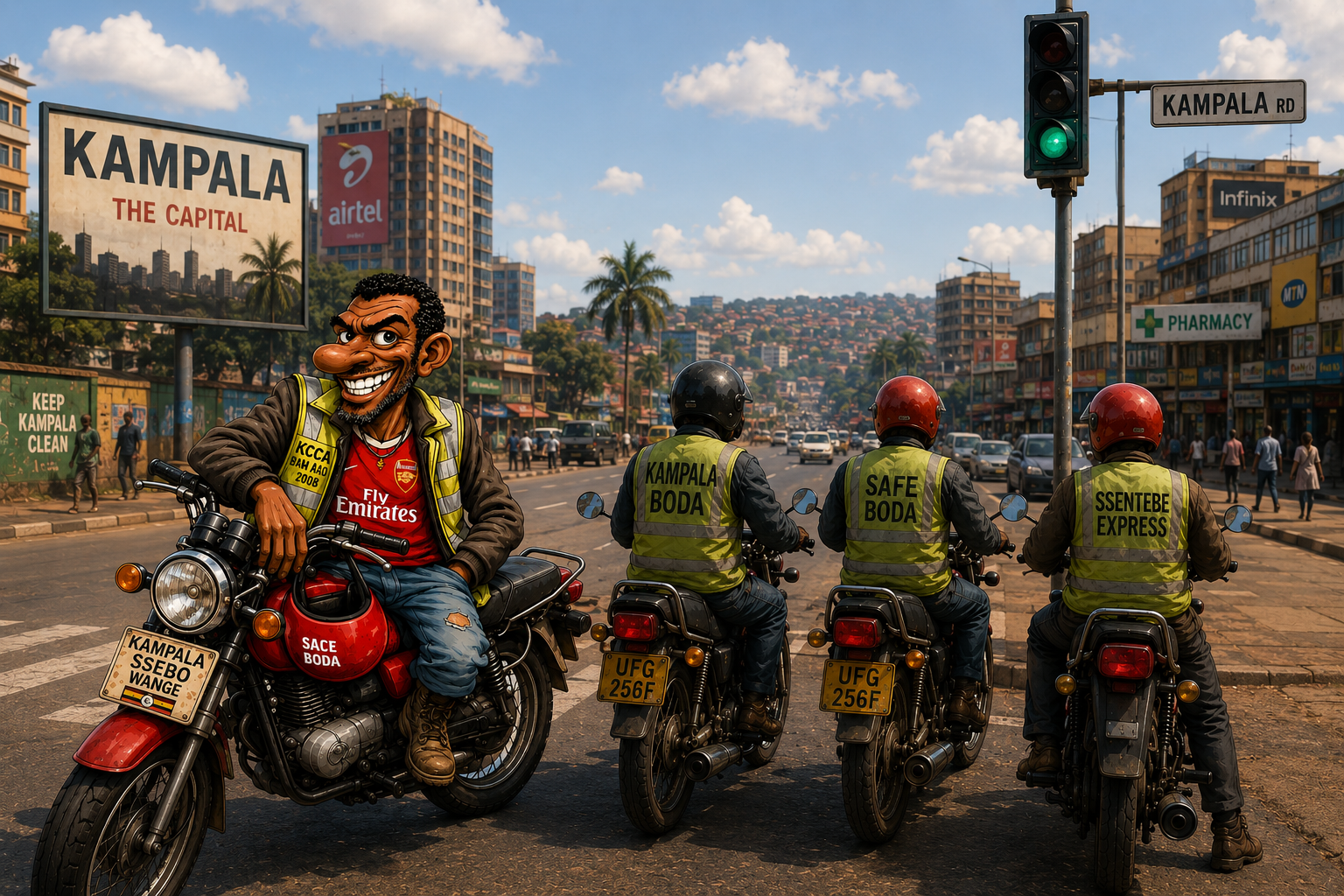
My brother, Kampala is not a city. Kampala is a spiritual test disguised as traffic. Every day people wake up and challenge common sense before breakfast. I have seen men with empty wallets order pork like ministers, and I have carried passengers who spent the entire journey insulting government, football referees, their landlords, and their exes without taking a single breath. That is the Kampala I know. That is why I became suspicious when the streets suddenly started looking disciplined.
The first sign appeared at a fuel station in Ntinda. A rider called Ssalongo Dangerous was standing beside his motorcycle carefully cleaning his reflector jacket while checking documents that normally only appear during serious emergencies. This was the same man who once told a traffic officer that his permit was "currently under spiritual construction." The man rides like every journey is the final scene of an action movie, yet there he was dusting his mirrors and inspecting paperwork like an accountant preparing for an audit.
I walked over and asked, "Ssalongo, are you expecting visitors from heaven?"
The man looked around nervously before lowering his voice. "Mzee, these days we are moving carefully."
The way he said it made me uncomfortable. Kampala men only whisper when discussing debt, side dishes, or things they don't fully understand. Immediately I knew some kind of lugambo had spread across the city.
By the next morning, Wandegeya stage looked completely different. The usual arguments were missing. Nobody was shouting about football. Nobody was promising to become a millionaire through betting. One rider was adjusting mirrors, another was checking indicators, and a third was inspecting tire pressure with the seriousness of a pilot preparing an international flight. I stood there holding my tea and wondering whether somebody had secretly replaced all the boda riders during the night.
Street wisdom, my friend: Kampala men fear embarrassment more than poverty. A poor man can still walk confidently. An embarrassed man wants to relocate to another district.
As passengers came and went, the strange behavior continued. A woman carrying shopping bags rushed toward the stage and demanded a quick ride because she was late. Normally ten riders would fight over that passenger as if she were carrying gold bars. Instead, one rider politely explained traffic rules to her while another reminded her to wear a helmet properly. The woman looked so confused that she spent the first minute of the journey asking whether everybody was feeling well.
The biggest shock arrived near a zebra crossing. An elderly man stepped onto the road expecting the usual Kampala experience of negotiating with speeding vehicles and praying quietly. Instead, motorcycles slowed down, cars stopped, and people actually gave him space to cross. The old man froze halfway across because he clearly suspected a trap. When he finally reached the other side, he turned around twice to confirm nobody was chasing him.
By afternoon the rumors had become more entertaining than reality itself. Every stage had experts explaining what was happening. One rider claimed invisible eyes were monitoring every road. Another swore that important people were paying attention to how citizens behaved. A betting addict near a kiosk announced that Kampala had entered "serious mode" and then refused to explain what serious mode actually meant. Nobody challenged him because confidence is often treated as evidence in this city.
I spent the evening riding through Kabalagala expecting the usual madness. Normally that area operates on a different understanding of life. Music shakes buildings, people make emotional decisions, and men introduce side dishes as cousins whenever they are spotted unexpectedly. Yet even there, something felt different. Drivers were indicating before turning. People were parking properly. One gentleman accidentally bumped into another and apologized immediately instead of preparing for a fifteen-minute argument.
Then Captain No-Brakes arrived.
Now this man was legendary. His riding style suggested that he believed traffic laws were optional suggestions written for weaker people. Even his guardian angel probably complained about working conditions. When he parked quietly and greeted everybody respectfully, the entire stage became suspicious. We watched him the way villagers watch a goat that suddenly starts speaking English.
After exchanging greetings, Captain cleared his throat and announced that he had decided to become a law-abiding citizen. The stage exploded with laughter. One rider nearly spilled tea on himself while another asked whether Captain had been replaced by an identical twin. The situation became even worse when Captain calmly removed a valid permit from his jacket. People gathered around to inspect it because nobody could remember the last time they had seen him carrying proper documents. Three riders examined it from different angles while an older man kept shaking his head in disbelief.
As darkness settled over Kampala, I rode home thinking about everything I had witnessed. Maybe people were reacting to rumors. Maybe they were reacting to conversations spreading across stages and bars. Or maybe Kampala simply enjoys overreacting to anything that sounds important. Whatever the reason, one thing was clear. Whenever General Muhoozi's name started dominating street conversations, even the most confident troublemakers suddenly remembered road rules they had ignored for years.
Even me, Mzee wa Boda, I found myself checking my documents twice before leaving home. Deep inside I was laughing, but I was also slightly nervous because Kampala has taught me one dangerous lesson. When reckless people become careful at the same time, a wise man does not waste energy asking too many questions. He adjusts his helmet, minds his business, and watches the drama from a safe distance.
Kampala moves fast. Shame moves faster.
I carried the story myself.