
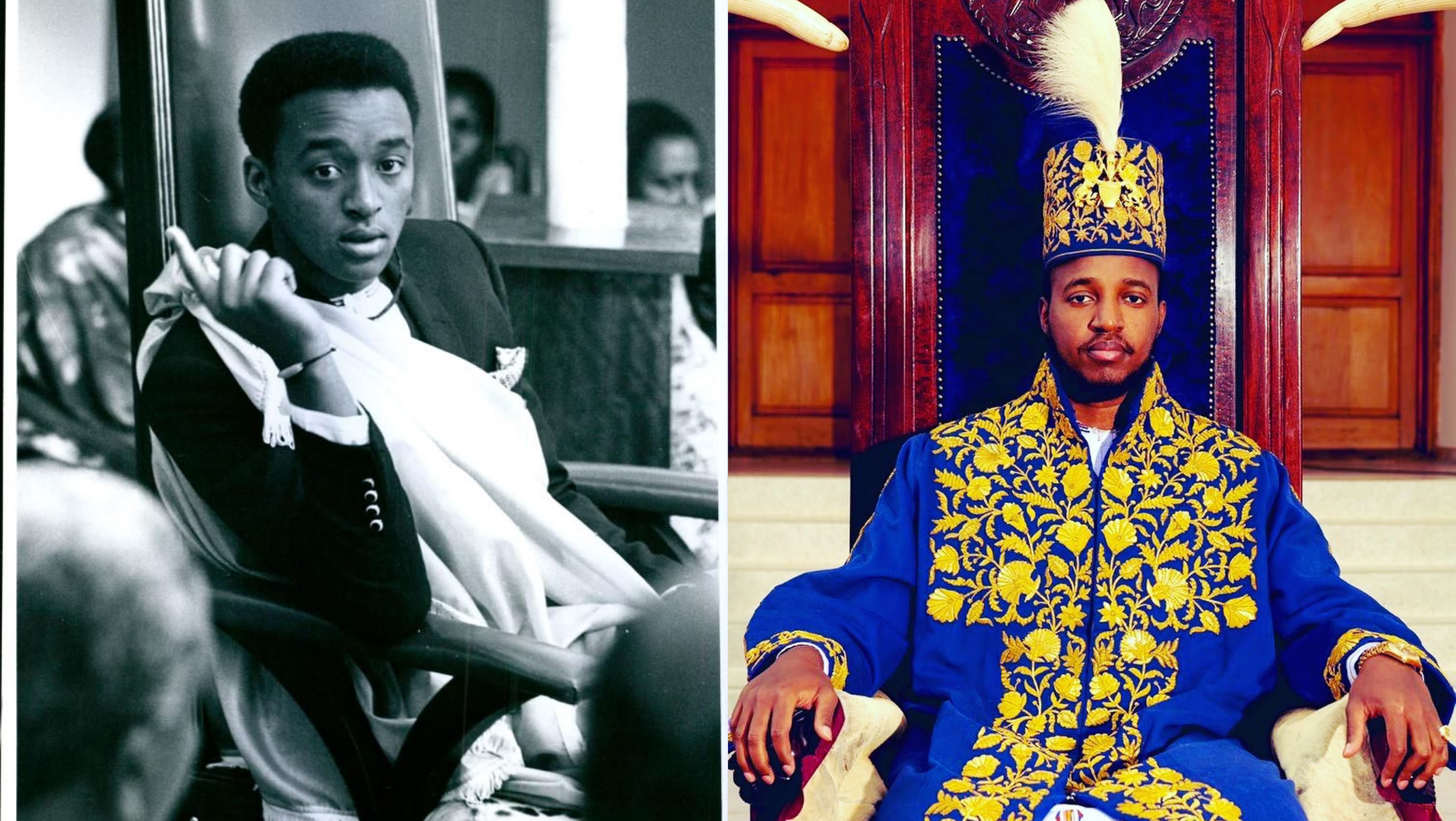
The history of the Tooro monarchy is a story of survival.
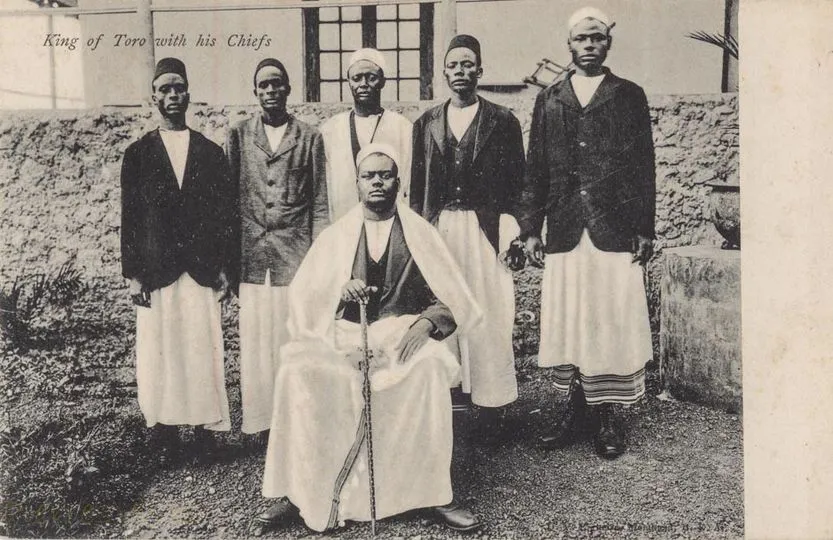
For nearly two centuries, the institution of the Omukama has stood at the centre of Tooro’s cultural and historical identity, carrying the kingdom through periods of royal succession, internal conflict, foreign influence, colonial rule, political upheaval and, eventually, the restoration of Uganda’s traditional kingdoms.
The story of the modern Tooro Kingdom begins around 1830, when Prince Kaboyo, the eldest son of Bunyoro’s Omukama Nyamutukura Kyebambe III, broke away from his father’s kingdom and established an independent kingdom of his own. He became Omukama Kaboyo Olimi I, the founder of the Tooro monarchy. Tooro’s own historical account describes the kingdom as emerging from this breakaway from Bunyoro, while noting that its royal traditions belong to the wider Babiito history of the Great Lakes region.
What followed was not a simple succession of kings. The first decades of the monarchy were marked by rivalry, rebellion and repeated changes on the throne, revealing just how contested royal authority could be in 19th-century Tooro.
The founding of a kingdom
Kaboyo Olimi I ruled from about 1830 until 1861. His decision to establish a separate kingdom gave Tooro its own royal house and political identity, while maintaining deep historical links with Bunyoro.
When Kaboyo died, the throne passed to Kazana Ruhaga, who ruled during the early 1860s. His reign ended violently when he was killed by his brother, Nyaika, who then seized the throne. Nyaika became Kyebambe I, beginning a period in which the royal succession became increasingly complicated.
The years that followed saw several claimants and short-lived reigns. Rukidi I briefly took the throne in 1871 before Nyaika returned, while Olimi II subsequently ruled from 1872 to 1875. The rapid changes were not simply matters of royal ceremony; they were connected to struggles over territory and power involving Tooro, Bunyoro, Buganda and other neighbouring political forces.
When the crown became a battlefield
The middle of the 19th century was perhaps the most turbulent period in the early history of the Tooro monarchy. Princes and rival claimants repeatedly challenged one another, while outside kingdoms became involved in the struggle for control of Tooro.
After Olimi II’s reign, Isingoma Rukidi II, Rububi Kyebambe II, Kakende Nyamuyonjo and Katera appear in the succession history, with some occupying the throne for remarkably short periods. Kakende, in particular, ruled twice, first from 1875 to 1876 and later from 1879 to 1880.
These were years in which the Tooro crown could change hands as a result of rebellion or military intervention. Kakende’s second reign ended when Bunyoro forces expelled him in 1880, and Tooro was subsequently brought back under Bunyoro’s control. The kingdom entered an interregnum lasting from 1880 to 1891, bringing the first major chapter of the Tooro monarchy to a close.
The return of the Tooro crown
The monarchy was restored in 1891 under Daudi Kasagama Kyebambe III, ushering in one of the longest and most consequential reigns in Tooro’s history.
Kasagama ruled until 1928, a period during which the political environment of the region was being transformed by British colonial expansion. The old kingdoms of the Great Lakes were increasingly incorporated into new colonial administrative structures, changing the relationship between traditional rulers and political power.
Kasagama’s long reign therefore belonged to a transitional generation: the Omukama remained a central figure in Tooro society, but the world around the monarchy was changing rapidly.
When Kasagama died in 1928, the throne passed to George David Matthew Kamurasi Rukidi III, who ruled until 1965. His reign stretched through some of the most important decades in Uganda’s modern history, including the final years of British colonial rule and the country’s independence in 1962.
The monarchy meets independent Uganda
Patrick David Matthew Kaboyo Olimi III succeeded Rukidi III in 1965. He inherited the throne at a time when Uganda was undergoing profound political changes, and within two years the monarchy would face perhaps its greatest institutional crisis.
In 1967, the government of Uganda abolished the country’s traditional kingdoms. The decision ended the official political existence of institutions such as Tooro, Buganda and Bunyoro.
For Tooro, this was a historic rupture. A monarchy whose roots stretched back to the 19th century was no longer recognised as a political institution.
Yet the abolition of the kingdom did not erase the identity attached to the crown. The history, traditions and cultural significance of the Tooro monarchy continued among the Batooro, even during the years when the kingdom no longer existed officially.
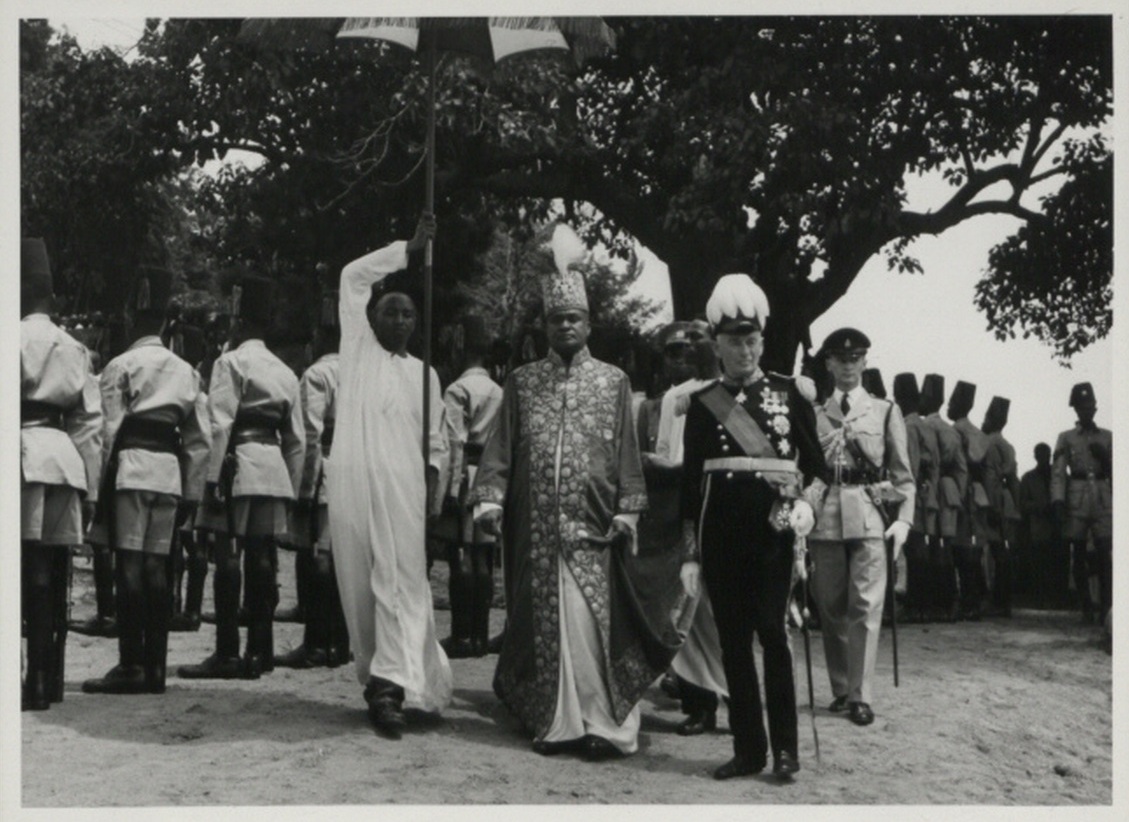
The return of the Omukama
The political landscape changed again in the early 1990s.
In 1993, Uganda restored its traditional kingdoms, allowing institutions such as Tooro to return after more than two decades of abolition. The restored kingdoms, however, were no longer political governments. Their role became primarily cultural, allowing traditional leaders to serve as custodians of history, customs and identity rather than as constitutional rulers exercising state power.
For Tooro, the restoration opened a new chapter.
Patrick Kaboyo Olimi III continued as the Omukama until his death in 1995. His successor was his young son, Oyo Nyimba Kabamba Iguru Rukidi IV, who ascended the throne at just three years old. His enthronement turned the Tooro monarchy into an international curiosity, as the child king became one of the youngest reigning monarchs in the world.
The boy who grew into a king
Oyo’s reign became one of the most recognisable chapters in the modern history of Tooro.
He inherited a monarchy that had already experienced enormous transformation. Unlike the kings of the 19th century, he did not govern an independent state. Instead, he presided over a restored cultural institution operating within the Republic of Uganda.
That distinction is important when understanding the modern Tooro monarchy. The Omukama’s authority today is fundamentally different from the political authority exercised by some of his predecessors. The crown represents heritage, culture, tradition and community identity rather than a separate sovereign government.
Oyo nevertheless became an important symbol of that identity. He grew from the three-year-old boy who captured international attention into an adult monarch who represented Tooro at home and abroad.
His death in August 2026, at the age of 34, brought his 31-year reign to an end and marked another major transition in the kingdom’s long history. The Tooro Kingdom has said that the succession will continue according to its traditions.
More than a list of kings
It is tempting to study the history of Tooro simply by memorising the names of its Omukamas: Kaboyo Olimi I, Ruhaga, Nyaika, Rukidi, Olimi II, Rukidi II, Rububi, Kakende, Katera, Kasagama, Rukidi III, Olimi III and Rukidi IV.
But the real story lies between those names.
Each reign represents a different period in the development of the kingdom. The early kings built a new political identity after the breakaway from Bunyoro. Their successors fought over the throne during an era of intense regional competition. Later rulers navigated the arrival of colonial rule and the transformation of traditional authority. The 20th-century kings witnessed Uganda move from colonialism to independence, only to see their monarchy abolished and, decades later, restored.
That is what makes the history of Tooro so compelling. The monarchy has survived not because history stood still, but because the institution repeatedly adapted to a changing Uganda.
A crown that endured
From the hills and valleys of western Uganda, the Tooro monarchy has witnessed nearly two centuries of dramatic change. It began as the project of a prince who broke away from Bunyoro and established his own kingdom; it endured succession battles and periods when the kingdom itself disappeared under Bunyoro’s control; it survived colonial rule and the creation of modern Uganda; and it endured the abolition of traditional kingdoms before returning in a new cultural role.
The story of Tooro, therefore, is not simply the story of individual kings.
It is the story of an institution that has remained woven into the identity of its people despite the changing meaning of kingship itself.
The throne has changed hands, the political system around it has changed, and Uganda itself has changed beyond recognition since 1830. Yet the title Omukama wa Tooro continues to carry the memory of the kingdom’s long journey.
And that is perhaps the most remarkable lesson in the history of Tooro: kingdoms may lose political power, crowns may pass from one generation to another, but institutions rooted deeply in the history and identity of a people can survive even the most dramatic political storms.