
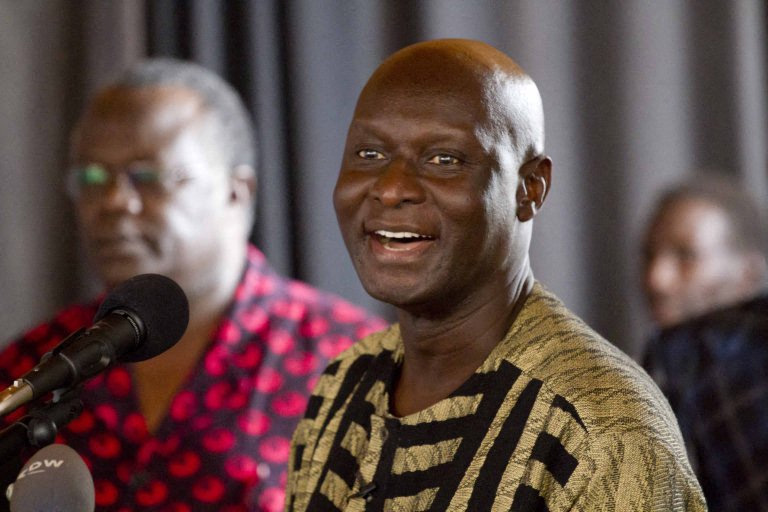
Few diplomats can claim to have changed the way the United Nations operates. Even fewer can say that their ideas have remained at the heart of the world’s most important international institution for more than four decades.
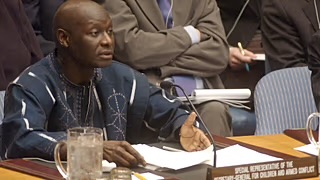
Uganda’s Ambassador Olara Otunnu belongs to that rare group.
As Uganda officially backs him for the post of United Nations Secretary-General, renewed attention is being paid not just to his candidacy, but to an innovation that has quietly shaped every UN leadership contest since 1981— the Otunnu Formula.
The name may not be familiar outside diplomatic circles, but inside the United Nations it carries enormous significance.
The idea that broke a global deadlock
In 1981, the Security Council was locked in one of the most difficult Secretary-General elections in UN history.
Sixteen rounds of voting had failed to produce a winner as Cold War rivalries left the Council deeply divided. No candidate could secure broad support without facing a veto from one of the five permanent members.
At just 31 years old, Olara Otunnu was serving as Uganda’s Permanent Representative to the United Nations and happened to hold the rotating presidency of the Security Council.
Instead of allowing the impasse to continue, Otunnu proposed an entirely different approach.
Rather than forcing repeated formal votes, he introduced confidential straw polls that allowed Council members to privately indicate whether they encouraged or discouraged each candidate. Permanent members used separate ballots, enabling the Council to identify candidates likely to face a veto without triggering another public diplomatic confrontation.
The system immediately broke the deadlock.
Within days, consensus emerged around Peru’s Javier Pérez de Cuéllar, who went on to become Secretary-General.
The process proved so effective that it was never abandoned.
More than forty years later, every UN Secretary-General—from Boutros Boutros-Ghali and Kofi Annan to Ban Ki-moon and António Guterres—has emerged through a version of the same straw-poll process first devised by Otunnu.
A legacy built on intellect, not politics
Diplomats often describe the Otunnu Formula as an exercise in institutional problem-solving rather than political maneuvering.
Instead of attempting to defeat opposing blocs, Otunnu designed a mechanism that allowed them to discover common ground.
It was a solution rooted in diplomacy, discretion and strategic thinking.
That ability to simplify an extraordinarily complex international dispute into a workable process is why many observers regard the formula as one of Uganda’s most influential contributions to modern multilateral diplomacy.
It also cemented Otunnu’s reputation as one of Africa’s most respected international negotiators.
Does creating the process make him the best person to lead it?
That question has become central as Otunnu campaigns for the UN’s highest office.
Supporters argue that few candidates understand the organization as deeply as someone who has helped shape its procedures, chaired the Security Council, served as Uganda’s Foreign Minister, led the International Peace Academy and later became the UN’s first Under-Secretary-General and Special Representative for Children and Armed Conflict.
Throughout his UN career, Otunnu championed international protections for children affected by war, helping place child protection permanently on the Security Council’s agenda and contributing to mechanisms that remain part of international humanitarian practice today.
Taken together, his supporters see a career defined by institution-building rather than headline-grabbing politics.
But brilliance alone does not decide the race
History, however, suggests that intellectual achievement is only one piece of the puzzle.
The UN Secretary-General is chosen through a highly political process in which candidates must secure at least nine votes in the Security Council while avoiding a veto from any of its five permanent members — the United States, the United Kingdom, France, Russia and China.
That means even the architect of the selection process cannot rely on reputation alone.
Regional politics, geopolitical alliances, gender considerations, diplomatic negotiations and the strategic interests of major powers will all influence the outcome.
The irony of history
There is, however, a remarkable symmetry to Otunnu’s candidacy.
The confidential straw poll that diplomats will use to measure support for him is, in essence, the very mechanism he conceived more than four decades ago.
It is a rare moment in international diplomacy: the designer of the system now becoming one of its participants.
Whether the Otunnu Formula ultimately helps its creator reach the UN’s top office remains uncertain. The formula was designed to reveal which candidate can command the broadest consensus, not to favor any individual. If anything, its enduring value lies in its neutrality and its ability to guide divided powers toward a compromise.
If Olara Otunnu succeeds, it will not be because the process bears his name. It will be because he can still do what his innovation accomplished in 1981: persuade competing powers that consensus is possible.
And that, many argue, is precisely the quality the United Nations needs most in its next Secretary-General.