
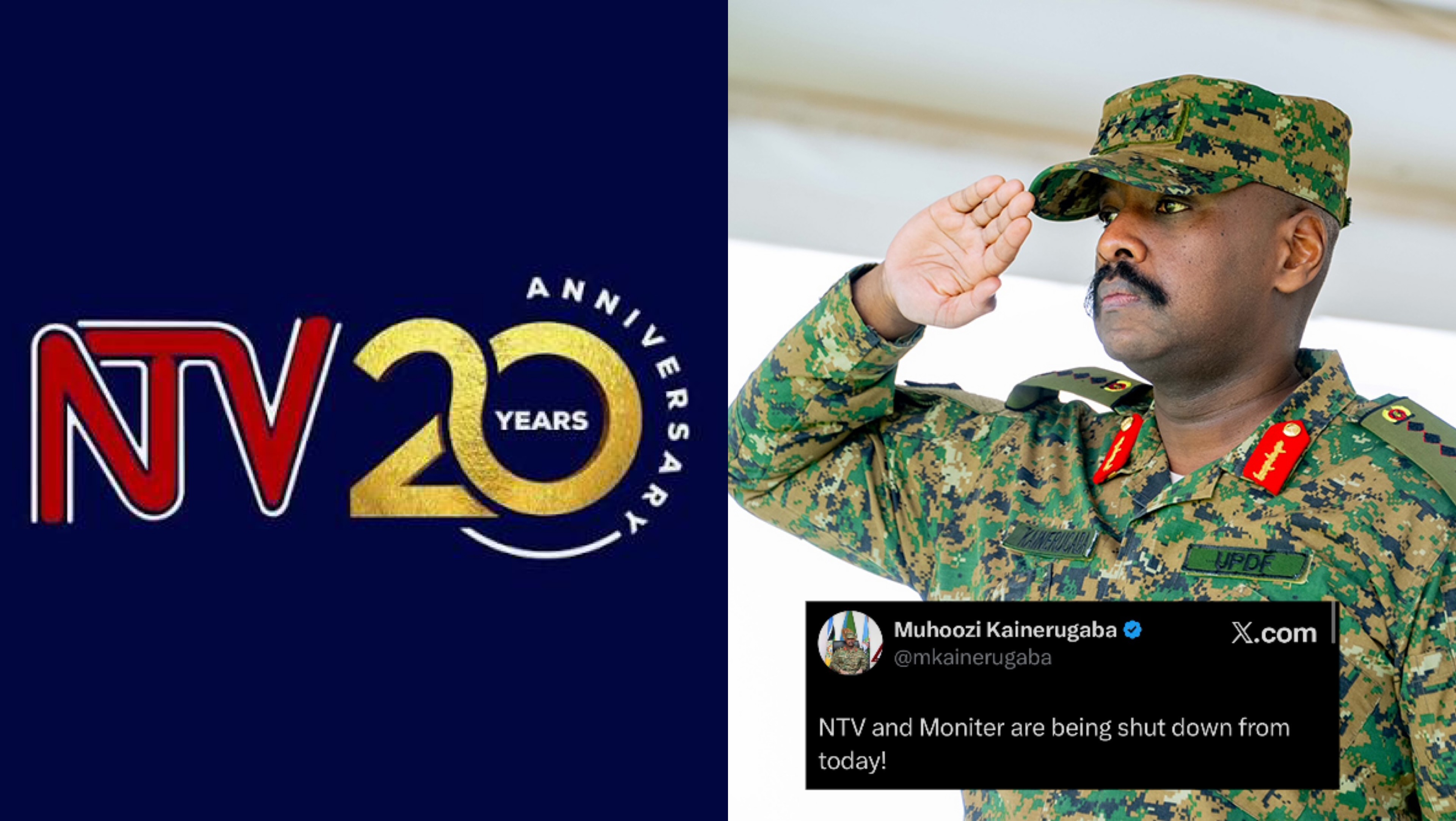
A single post on X by Chief of Defence Forces Gen. Muhoozi Kainerugaba has once again thrown Uganda’s media landscape into intense debate.
In his latest message, Muhoozi declared:
“Mzee has approved my plan to close both NTV and Monitor. We are moving immediately!”
The statement came after days of earlier posts in which he said he wanted to “switch off” NTV Uganda and the Daily Monitor, adding at the time that he only needed “clearance from Mzee.”
His newest claim suggests that clearance has now been granted. However, the bigger question remains:
Will NTV Uganda and Daily Monitor actually be closed?
At the time of publication, there is no official government announcement, legal order, directive from the Uganda Communications Commission (UCC), court decision, or Gazette notice confirming the closure of either media house. Publicly available reporting also indicates that no formal shutdown process has been announced.
That distinction is significant.
While Muhoozi’s social media posts often dominate national conversation and frequently make headlines, not every statement posted on his X account is followed by official government action.
Closing licensed television stations or newspapers in Uganda would generally require action through the relevant legal and regulatory institutions rather than a social media announcement alone.
The remarks have nevertheless sparked fresh discussion about press freedom, with journalists, lawyers and political observers closely watching for any official developments. Independent media organisations such as NTV Uganda and the Daily Monitor have long been prominent voices in Uganda’s news landscape and have previously faced legal and regulatory disputes with the state.
So, is a shutdown imminent?
For now, the evidence suggests there is no confirmation that NTV Uganda or the Daily Monitor are being closed. Muhoozi’s post is a political statement that has generated widespread attention, but it has not been accompanied by an official government directive or regulatory action.
Until such an order is publicly issued, the claim remains unverified as government policy, even though it was posted by a senior state official on his verified account. Ugandans will now be watching closely to see whether the statement is followed by concrete legal or administrative action or whether it remains another controversial social media declaration.